Buy dragons-shop.com ?
We are moving the project
dragons-shop.com .
Are you interested in purchasing the domain
dragons-shop.com ?
domain@kv-gmbh.de · 0541-91531010
Buy dragons-shop.com ?
How is radioactivity created?
Radioactivity is created when an unstable atomic nucleus undergoes radioactive decay, emitting particles and energy in the process. This decay can occur spontaneously or be induced through processes like nuclear fission or fusion. Radioactive elements have an excess of energy or mass in their nuclei, leading to instability and the release of radiation as they decay into more stable forms. This radiation can take the form of alpha particles, beta particles, gamma rays, or neutrons. **
Does radioactivity taste metallic?
No, radioactivity does not have a taste. Radioactivity refers to the emission of particles or energy from the nucleus of an unstable atom, and it is not a physical substance that can be tasted. The metallic taste that is sometimes associated with radioactivity may be due to exposure to certain metals or chemicals that are radioactive, but the radioactivity itself does not have a taste. **


Similar search terms for Radioactivity
Top-Angebote
Products related to Radioactivity:
-
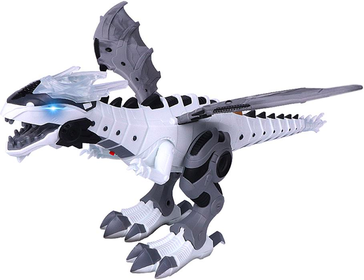
Playful Picks Fire Breathing Roaring Dragon Toy Interactive Walking Dinosaur WhiteIgnite your child's imagination with the Fire Breathing Roaring Dragon Toy, an extraordinary interactive walking dinosaur that transports young adventurers to a prehistoric world filled with aweinspiring dragons and mighty dinosaurs. Perfect for...39,97 $*Shipping: 0,00 $Secure redirect to the provider
-
How is radioactivity formed?
Radioactivity is formed when an unstable atomic nucleus undergoes radioactive decay, emitting particles and energy in the process. This instability can be caused by having an excess of protons or neutrons in the nucleus, leading to an imbalance in the forces holding the nucleus together. The emitted particles can include alpha particles (helium nuclei), beta particles (electrons or positrons), and gamma rays (high-energy photons). The rate at which a radioactive substance decays is measured by its half-life, which is the time it takes for half of the atoms in a sample to decay. **
-
What exactly is radioactivity?
Radioactivity is the process by which unstable atomic nuclei emit particles or electromagnetic radiation in order to become more stable. This emission can take the form of alpha particles, beta particles, or gamma rays. Radioactive materials have an excess of energy or mass, which they release in the form of radiation until they reach a stable state. This radiation can be harmful to living organisms if they are exposed to it in high doses. **
-
Does radioactivity disrupt electricity?
Radioactivity itself does not disrupt electricity. However, in certain situations, radioactive materials can interfere with electrical equipment. For example, high levels of radiation can cause electrical components to malfunction or even fail. Additionally, radioactive materials can generate heat, which can potentially affect the performance of electrical systems. Overall, while radioactivity does not directly disrupt electricity, it can have indirect effects on electrical equipment in certain circumstances. **
-
Would fire-breathing dragons be biologically possible?
No, fire-breathing dragons would not be biologically possible. The ability to breathe fire would require a biological mechanism to produce and expel a flammable substance, as well as a way to ignite it. There are no known biological systems that could accomplish this, and the energy required to produce and expel fire would be impractical for a living organism. Additionally, the heat and pressure from breathing fire would likely be harmful to the dragon's own body. Therefore, fire-breathing dragons are purely a product of mythology and fiction. **
What is meant by radioactivity?
Radioactivity is the process by which unstable atomic nuclei emit particles or electromagnetic radiation in order to become more stable. This emission can take the form of alpha particles, beta particles, or gamma rays. Radioactive decay is a random process, and the rate at which it occurs is measured by the half-life of the radioactive material. **
How much radioactivity is normal?
Normal levels of radioactivity can vary depending on the specific location and environment. In general, background radiation levels are typically around 0.1 to 0.2 microsieverts per hour (µSv/h) in most parts of the world. However, certain areas may have higher natural background radiation levels due to factors such as the presence of radioactive minerals in the soil or rocks. It's important to note that exposure to higher levels of radioactivity, whether from natural or man-made sources, can pose health risks, so it's important to monitor and limit exposure when possible. **
Top-Angebote
Products related to Radioactivity:
-
Piccadilly Press The Boy Who Grew Dragons Series 6 Books Collection Set by Andy Shepherd – The Boy Who Grew Dragons, Flew with Dragons & Fun Fantasy Adventure CollectiThe Boy Who Grew Dragons Series 6 Books Collection Set By Andy Shepherd: The Boy Who Grew Dragons: When Tomas discovers a strange old tree at the bottom of his grandad's garden, he doesn't think much of it. But he takes the funny fruit from the tree back into the house - and gets the shock and delight of his life when a tiny dragon hatches! The Boy Who Lived with Dragons: Tomas has a secret - a big secret. He has his own tiny dragon, Flicker! A dragon which grew on a very special tree at the bottom of his grandad's garden. And not only that - his friends Ted, Kai and Kat have dragons too, all grown on the same dragonfruit tree . The Boy Who Flew with Dragons: Tomas can't imagine life without his little dragon Flicker. He's become more than a pet - he's a friend like no other. And growing dragons on the dragonfruit tree in the garden with his friends Ted, Kat and Kai is the most amazing thing ever. The Boy Who Dreamed of Dragons: Eleven-year-old Tomas has a secret friend like no other: Flicker, a dragon with glittering eyes and scales that flicker from fiery orange to ruby red. But Tomas is also having to get used to Flicker being away, now that his dragon's home is back in the frosty North. The Boy Who Sang with Dragons: Tomas is a fully-fledged expert dragon grower and protector of the dragonfruit tree. He has eyes in the back of his head for watching over those sneaky dragons, awesomely fast reflexes for putting out sparks. The Ultimate Guide to Growing Dragons: Tomas, the boy who grew dragons, is officially the Grand High Dragon Master. He's lived with his dragons - Flicker and Zing - and grown dozens more. He's an expert at caring for the dragonfruit tree.26,89 £*Shipping: 2,99 £Secure redirect to the provider
-
Youfap Market Glass Painted Acrylic Window Hanging, Mythical Fire Phoenix & Turtle Sun Catcher, Porch Pendant Decoration birdSymbolic Beauty That Feels Personal Bring powerful symbolism and visual warmth into your space with the Mythical Fire Phoenix & Turtle Sun Catcher, designed to reflect renewal, protection, and harmony. Crafted as a Glass Painted Acrylic window...34,97 $*Shipping: 0,00 $Secure redirect to the provider
-
Playful Picks Fire Breathing Roaring Dragon Toy Interactive Walking Dinosaur WhiteIgnite your child's imagination with the Fire Breathing Roaring Dragon Toy, an extraordinary interactive walking dinosaur that transports young adventurers to a prehistoric world filled with aweinspiring dragons and mighty dinosaurs. Perfect for...39,97 $*Shipping: 0,00 $Secure redirect to the provider
-
How is radioactivity created?
Radioactivity is created when an unstable atomic nucleus undergoes radioactive decay, emitting particles and energy in the process. This decay can occur spontaneously or be induced through processes like nuclear fission or fusion. Radioactive elements have an excess of energy or mass in their nuclei, leading to instability and the release of radiation as they decay into more stable forms. This radiation can take the form of alpha particles, beta particles, gamma rays, or neutrons. **
-
Does radioactivity taste metallic?
No, radioactivity does not have a taste. Radioactivity refers to the emission of particles or energy from the nucleus of an unstable atom, and it is not a physical substance that can be tasted. The metallic taste that is sometimes associated with radioactivity may be due to exposure to certain metals or chemicals that are radioactive, but the radioactivity itself does not have a taste. **
-
How is radioactivity formed?
Radioactivity is formed when an unstable atomic nucleus undergoes radioactive decay, emitting particles and energy in the process. This instability can be caused by having an excess of protons or neutrons in the nucleus, leading to an imbalance in the forces holding the nucleus together. The emitted particles can include alpha particles (helium nuclei), beta particles (electrons or positrons), and gamma rays (high-energy photons). The rate at which a radioactive substance decays is measured by its half-life, which is the time it takes for half of the atoms in a sample to decay. **
-
What exactly is radioactivity?
Radioactivity is the process by which unstable atomic nuclei emit particles or electromagnetic radiation in order to become more stable. This emission can take the form of alpha particles, beta particles, or gamma rays. Radioactive materials have an excess of energy or mass, which they release in the form of radiation until they reach a stable state. This radiation can be harmful to living organisms if they are exposed to it in high doses. **
Similar search terms for Radioactivity
-
Does radioactivity disrupt electricity?
Radioactivity itself does not disrupt electricity. However, in certain situations, radioactive materials can interfere with electrical equipment. For example, high levels of radiation can cause electrical components to malfunction or even fail. Additionally, radioactive materials can generate heat, which can potentially affect the performance of electrical systems. Overall, while radioactivity does not directly disrupt electricity, it can have indirect effects on electrical equipment in certain circumstances. **
-
Would fire-breathing dragons be biologically possible?
No, fire-breathing dragons would not be biologically possible. The ability to breathe fire would require a biological mechanism to produce and expel a flammable substance, as well as a way to ignite it. There are no known biological systems that could accomplish this, and the energy required to produce and expel fire would be impractical for a living organism. Additionally, the heat and pressure from breathing fire would likely be harmful to the dragon's own body. Therefore, fire-breathing dragons are purely a product of mythology and fiction. **
-
What is meant by radioactivity?
Radioactivity is the process by which unstable atomic nuclei emit particles or electromagnetic radiation in order to become more stable. This emission can take the form of alpha particles, beta particles, or gamma rays. Radioactive decay is a random process, and the rate at which it occurs is measured by the half-life of the radioactive material. **
-
How much radioactivity is normal?
Normal levels of radioactivity can vary depending on the specific location and environment. In general, background radiation levels are typically around 0.1 to 0.2 microsieverts per hour (µSv/h) in most parts of the world. However, certain areas may have higher natural background radiation levels due to factors such as the presence of radioactive minerals in the soil or rocks. It's important to note that exposure to higher levels of radioactivity, whether from natural or man-made sources, can pose health risks, so it's important to monitor and limit exposure when possible. **
* All prices are inclusive of VAT and, if applicable, plus shipping costs. The offer information is based on the details provided by the respective shop and is updated through automated processes. Real-time updates do not occur, so deviations can occur in individual cases. ** Note: Parts of this content were created by AI.