Buy dragons-shop.com ?
We are moving the project
dragons-shop.com .
Are you interested in purchasing the domain
dragons-shop.com ?
domain@kv-gmbh.de · 0541-91531010
Buy dragons-shop.com ?
How did medieval monasteries originate?
Medieval monasteries originated in the early Christian period as a response to the growing popularity of asceticism and the desire for a more contemplative and disciplined way of life. The earliest monastic communities were established by individuals seeking to live a life of prayer, meditation, and simplicity, away from the distractions of the world. Over time, these communities grew in size and influence, leading to the development of formal monastic orders and the construction of monasteries as centers of religious life and learning. The monastic movement spread throughout Europe, with different orders and traditions emerging, each with its own rules and practices. **
Why were the medieval monasteries actually places of great education?
Medieval monasteries were places of great education because they were centers of learning and scholarship. Monks and nuns in these monasteries were often highly educated and dedicated to the pursuit of knowledge. They preserved and copied ancient texts, and many monasteries had extensive libraries. Monasteries also provided education to the surrounding communities, teaching reading, writing, and other practical skills. Additionally, they were often centers of scientific and medical knowledge, making significant contributions to the advancement of learning during the medieval period. **


Similar search terms for Monasteries
Top-Angebote
Products related to Monasteries:
-
Playful Picks Fire Breathing Roaring Dragon Toy Interactive Walking Dinosaur WhiteIgnite your child's imagination with the Fire Breathing Roaring Dragon Toy, an extraordinary interactive walking dinosaur that transports young adventurers to a prehistoric world filled with aweinspiring dragons and mighty dinosaurs. Perfect for...39,97 $*Shipping: 0,00 $Secure redirect to the provider
-
Uplift Curations Game Of Thrones Tapestry Flag Medieval Fantasy Wall Banner blackTurn your space into a scene straight out of Westeros. This Game of Thrones tapestry brings bold, cinematic energy to any room, instantly elevating plain walls into a powerful display of fandom. Designed for fans, collectors, and themed spaces, it...82,50 $*Shipping: 0,00 $Secure redirect to the provider
-
Inspire Curations 45 150cm Game Of Thrones Tapestry Flag Medieval Fantasy Wall Banner Decor blackBring the power and drama of Westeros into your space with this bold Game of Thrones tapestry flag. Featuring iconic houseinspired designs and rich colors, it instantly transforms any wall into a statement of fandom and style. Whether you're...80,50 $*Shipping: 0,00 $Secure redirect to the provider
-
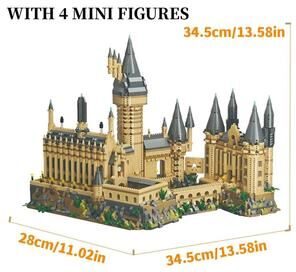
Inspire Select Medieval Magic Castle Micro Building Blocks Fantasy Palace DIY Bricks Set no LightBring fantasy adventures to life with this beautifully detailed magic castle building blocks set designed for creative minds and fantasy lovers. Featuring intricate architecture and enchanting palaceinspired details, this micro bricks castle model...192,98 $*Shipping: 0,00 $Secure redirect to the provider



-
How did monasteries originate?
Monasteries originated in the early Christian era as communities of devout individuals seeking to live a life of prayer, meditation, and service to God. The concept of monasticism was influenced by the teachings of Jesus Christ and the examples set by early Christian ascetics. Monasteries provided a structured environment for monks and nuns to dedicate themselves fully to their spiritual pursuits, away from the distractions of the secular world. Over time, monasteries evolved into centers of learning, culture, and hospitality, playing a significant role in the spread of Christianity and the preservation of knowledge. **
-
Are there monasteries without religion?
Monasteries are traditionally associated with religious practices and beliefs, so it is rare to find a monastery without religion. The purpose of a monastery is usually to provide a place for religious contemplation, prayer, and communal living according to the beliefs of a specific faith. However, there may be some instances where a monastery has been repurposed for non-religious activities or functions, but these would be exceptions rather than the norm. **
-
How do monasteries die out?
Monasteries can die out for a variety of reasons. One common reason is a decline in the number of monks or nuns joining the monastery, leading to a lack of new members to sustain the community. Additionally, changes in societal attitudes and values can lead to a decrease in support for monastic life, resulting in a decline in resources and funding for the monastery. Economic challenges, such as a lack of financial sustainability or the loss of patronage, can also contribute to the decline and eventual closure of a monastery. Finally, internal conflicts, leadership issues, or a loss of spiritual vitality can also lead to the decline and eventual demise of a monastery. **
-
What do you think of monasteries?
Monasteries have a long history of providing a place for spiritual reflection, study, and communal living. They offer a peaceful environment for individuals seeking solitude and a deeper connection with their faith. Monasteries also often serve as centers of learning and preservation of cultural heritage. Overall, monasteries play a valuable role in society by promoting contemplation, education, and community service. **


Why do people go to monasteries?
People go to monasteries for a variety of reasons, including seeking spiritual guidance, finding peace and solitude, and engaging in religious practices and rituals. Monasteries offer a retreat from the distractions of everyday life, allowing individuals to focus on their spiritual growth and inner peace. Additionally, some people visit monasteries to learn from the wisdom and teachings of the monks and nuns who reside there, seeking to gain a deeper understanding of their faith and themselves. Overall, monasteries provide a space for individuals to connect with their spirituality and find a sense of purpose and meaning in their lives. **
Would fire-breathing dragons be biologically possible?
No, fire-breathing dragons would not be biologically possible. The ability to breathe fire would require a biological mechanism to produce and expel a flammable substance, as well as a way to ignite it. There are no known biological systems that could accomplish this, and the energy required to produce and expel fire would be impractical for a living organism. Additionally, the heat and pressure from breathing fire would likely be harmful to the dragon's own body. Therefore, fire-breathing dragons are purely a product of mythology and fiction. **
Top-Angebote
Products related to Monasteries:
-
Piccadilly Press The Boy Who Grew Dragons Series 6 Books Collection Set by Andy Shepherd – The Boy Who Grew Dragons, Flew with Dragons & Fun Fantasy Adventure CollectiThe Boy Who Grew Dragons Series 6 Books Collection Set By Andy Shepherd: The Boy Who Grew Dragons: When Tomas discovers a strange old tree at the bottom of his grandad's garden, he doesn't think much of it. But he takes the funny fruit from the tree back into the house - and gets the shock and delight of his life when a tiny dragon hatches! The Boy Who Lived with Dragons: Tomas has a secret - a big secret. He has his own tiny dragon, Flicker! A dragon which grew on a very special tree at the bottom of his grandad's garden. And not only that - his friends Ted, Kai and Kat have dragons too, all grown on the same dragonfruit tree . The Boy Who Flew with Dragons: Tomas can't imagine life without his little dragon Flicker. He's become more than a pet - he's a friend like no other. And growing dragons on the dragonfruit tree in the garden with his friends Ted, Kat and Kai is the most amazing thing ever. The Boy Who Dreamed of Dragons: Eleven-year-old Tomas has a secret friend like no other: Flicker, a dragon with glittering eyes and scales that flicker from fiery orange to ruby red. But Tomas is also having to get used to Flicker being away, now that his dragon's home is back in the frosty North. The Boy Who Sang with Dragons: Tomas is a fully-fledged expert dragon grower and protector of the dragonfruit tree. He has eyes in the back of his head for watching over those sneaky dragons, awesomely fast reflexes for putting out sparks. The Ultimate Guide to Growing Dragons: Tomas, the boy who grew dragons, is officially the Grand High Dragon Master. He's lived with his dragons - Flicker and Zing - and grown dozens more. He's an expert at caring for the dragonfruit tree.26,89 £*Shipping: 2,99 £Secure redirect to the provider
-
Youfap Market Glass Painted Acrylic Window Hanging, Mythical Fire Phoenix & Turtle Sun Catcher, Porch Pendant Decoration birdSymbolic Beauty That Feels Personal Bring powerful symbolism and visual warmth into your space with the Mythical Fire Phoenix & Turtle Sun Catcher, designed to reflect renewal, protection, and harmony. Crafted as a Glass Painted Acrylic window...34,97 $*Shipping: 0,00 $Secure redirect to the provider
-
Playful Picks Fire Breathing Roaring Dragon Toy Interactive Walking Dinosaur WhiteIgnite your child's imagination with the Fire Breathing Roaring Dragon Toy, an extraordinary interactive walking dinosaur that transports young adventurers to a prehistoric world filled with aweinspiring dragons and mighty dinosaurs. Perfect for...39,97 $*Shipping: 0,00 $Secure redirect to the provider
-
Uplift Curations Game Of Thrones Tapestry Flag Medieval Fantasy Wall Banner blackTurn your space into a scene straight out of Westeros. This Game of Thrones tapestry brings bold, cinematic energy to any room, instantly elevating plain walls into a powerful display of fandom. Designed for fans, collectors, and themed spaces, it...82,50 $*Shipping: 0,00 $Secure redirect to the provider
-
How did medieval monasteries originate?
Medieval monasteries originated in the early Christian period as a response to the growing popularity of asceticism and the desire for a more contemplative and disciplined way of life. The earliest monastic communities were established by individuals seeking to live a life of prayer, meditation, and simplicity, away from the distractions of the world. Over time, these communities grew in size and influence, leading to the development of formal monastic orders and the construction of monasteries as centers of religious life and learning. The monastic movement spread throughout Europe, with different orders and traditions emerging, each with its own rules and practices. **
-
Why were the medieval monasteries actually places of great education?
Medieval monasteries were places of great education because they were centers of learning and scholarship. Monks and nuns in these monasteries were often highly educated and dedicated to the pursuit of knowledge. They preserved and copied ancient texts, and many monasteries had extensive libraries. Monasteries also provided education to the surrounding communities, teaching reading, writing, and other practical skills. Additionally, they were often centers of scientific and medical knowledge, making significant contributions to the advancement of learning during the medieval period. **
-
How did monasteries originate?
Monasteries originated in the early Christian era as communities of devout individuals seeking to live a life of prayer, meditation, and service to God. The concept of monasticism was influenced by the teachings of Jesus Christ and the examples set by early Christian ascetics. Monasteries provided a structured environment for monks and nuns to dedicate themselves fully to their spiritual pursuits, away from the distractions of the secular world. Over time, monasteries evolved into centers of learning, culture, and hospitality, playing a significant role in the spread of Christianity and the preservation of knowledge. **
-
Are there monasteries without religion?
Monasteries are traditionally associated with religious practices and beliefs, so it is rare to find a monastery without religion. The purpose of a monastery is usually to provide a place for religious contemplation, prayer, and communal living according to the beliefs of a specific faith. However, there may be some instances where a monastery has been repurposed for non-religious activities or functions, but these would be exceptions rather than the norm. **
Similar search terms for Monasteries
-
Inspire Curations 45 150cm Game Of Thrones Tapestry Flag Medieval Fantasy Wall Banner Decor blackBring the power and drama of Westeros into your space with this bold Game of Thrones tapestry flag. Featuring iconic houseinspired designs and rich colors, it instantly transforms any wall into a statement of fandom and style. Whether you're...80,50 $*Shipping: 0,00 $Secure redirect to the provider
-
Inspire Select Medieval Magic Castle Micro Building Blocks Fantasy Palace DIY Bricks Set no LightBring fantasy adventures to life with this beautifully detailed magic castle building blocks set designed for creative minds and fantasy lovers. Featuring intricate architecture and enchanting palaceinspired details, this micro bricks castle model...192,98 $*Shipping: 0,00 $Secure redirect to the provider
-
Uplift Curations Game Of Thrones Tapestry Flag Medieval Fantasy Wall Banner redTurn your space into a scene straight out of Westeros. This Game of Thrones tapestry brings bold, cinematic energy to any room, instantly elevating plain walls into a powerful display of fandom. Designed for fans, collectors, and themed spaces, it...82,50 $*Shipping: 0,00 $Secure redirect to the provider
-
Uplift Curations Game Of Thrones Tapestry Flag Medieval Fantasy Wall Banner red BlackTurn your space into a scene straight out of Westeros. This Game of Thrones tapestry brings bold, cinematic energy to any room, instantly elevating plain walls into a powerful display of fandom. Designed for fans, collectors, and themed spaces, it...82,50 $*Shipping: 0,00 $Secure redirect to the provider
-
How do monasteries die out?
Monasteries can die out for a variety of reasons. One common reason is a decline in the number of monks or nuns joining the monastery, leading to a lack of new members to sustain the community. Additionally, changes in societal attitudes and values can lead to a decrease in support for monastic life, resulting in a decline in resources and funding for the monastery. Economic challenges, such as a lack of financial sustainability or the loss of patronage, can also contribute to the decline and eventual closure of a monastery. Finally, internal conflicts, leadership issues, or a loss of spiritual vitality can also lead to the decline and eventual demise of a monastery. **
-
What do you think of monasteries?
Monasteries have a long history of providing a place for spiritual reflection, study, and communal living. They offer a peaceful environment for individuals seeking solitude and a deeper connection with their faith. Monasteries also often serve as centers of learning and preservation of cultural heritage. Overall, monasteries play a valuable role in society by promoting contemplation, education, and community service. **
-
Why do people go to monasteries?
People go to monasteries for a variety of reasons, including seeking spiritual guidance, finding peace and solitude, and engaging in religious practices and rituals. Monasteries offer a retreat from the distractions of everyday life, allowing individuals to focus on their spiritual growth and inner peace. Additionally, some people visit monasteries to learn from the wisdom and teachings of the monks and nuns who reside there, seeking to gain a deeper understanding of their faith and themselves. Overall, monasteries provide a space for individuals to connect with their spirituality and find a sense of purpose and meaning in their lives. **
-
Would fire-breathing dragons be biologically possible?
No, fire-breathing dragons would not be biologically possible. The ability to breathe fire would require a biological mechanism to produce and expel a flammable substance, as well as a way to ignite it. There are no known biological systems that could accomplish this, and the energy required to produce and expel fire would be impractical for a living organism. Additionally, the heat and pressure from breathing fire would likely be harmful to the dragon's own body. Therefore, fire-breathing dragons are purely a product of mythology and fiction. **
* All prices are inclusive of VAT and, if applicable, plus shipping costs. The offer information is based on the details provided by the respective shop and is updated through automated processes. Real-time updates do not occur, so deviations can occur in individual cases. ** Note: Parts of this content were created by AI.